
How to Balance Website Performance and Interactive UX for Industrial Brands
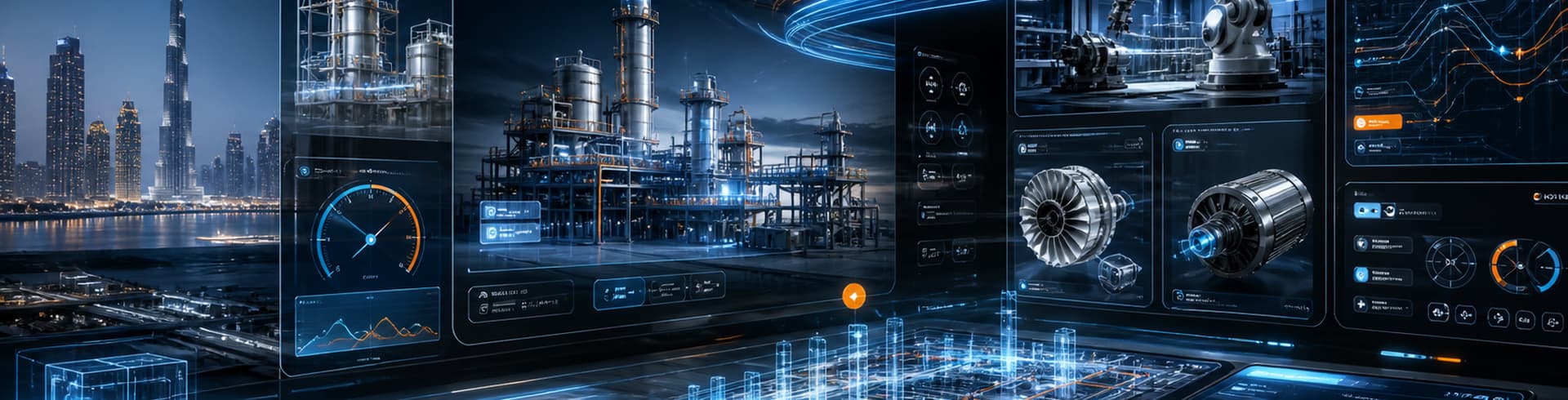


Industrial brands often want a website that feels modern, premium, and visually confident. At the same time, they also want the site to load quickly, work smoothly on mobile devices, and avoid the technical bloat that often comes with motion-heavy experiences.
That is where many industrial website projects go wrong.
Too often, performance and interactive UX are treated as opposing priorities. One side argues for speed, simplicity, and caution. The other pushes for stronger visuals, transitions, motion, and a more polished digital experience. The result is usually an unnecessary compromise: either a website that feels flat and generic, or one that looks ambitious but performs poorly in real use.
In practice, industrial brands should not have to choose between credibility and modern UX. They need both.
A strong industrial website should communicate trust quickly, reflect the precision of the business, and support a smoother user journey across desktop and mobile. It should feel current without becoming distracting, and it should perform well without looking stripped down. If your business is evaluating a broader website redesign, that balance should be treated as a strategic decision from the start, not something left until the end of design or development.
Why Industrial Brands Often End Up With Flat Website UX
Many industrial and engineering websites are built around caution.
That caution is understandable. These businesses often operate in technical, operations-heavy, or enterprise environments where trust matters more than novelty. Decision-makers may worry that bold design, richer motion, or advanced front-end interactions will make the site feel less serious or introduce performance risks.
So the website ends up taking the safest possible route.
It lists services. It includes company information. It may have the right pages and the right navigation labels. But it does not create a strong first impression, and it does not help the brand feel as capable online as it is in the real world.
This is a common problem in industrial web design. A business can have decades of technical credibility, a strong operational track record, and a clear competitive advantage, yet still present itself online through a website experience that feels outdated or interchangeable.
That gap matters.
In B2B and industrial buying journeys, perception starts before the first call, RFQ, or site visit. Buyers, procurement teams, consultants, and internal stakeholders often form an impression of the company long before direct contact. A generic or rigid website can unintentionally weaken that impression, even when the underlying business is highly credible.
This is one reason why strong UI/UX strategy matters for industrial brands. The question is not whether the website looks “creative.” The question is whether the digital experience supports trust, clarity, and the right level of modernity for the market.
Why Performance and Interactive UX Are Not Opposites
A slow website is not the result of good UX. It is usually the result of careless UX implementation.
That distinction is important.
Interactive UX does not automatically mean heavy code, bloated assets, or bad mobile performance. A website can use animation, layered content, subtle parallax, transitions, and strong visual sequencing while still maintaining a disciplined performance profile. The difference comes down to design restraint and technical execution.
When businesses assume all motion is risky, they often solve the wrong problem. The issue is rarely that a site includes interactivity. The issue is that many websites use it without enough control.
Good interactive UX should help the user:
- understand hierarchy faster
- experience smoother transitions between sections
- feel the brand’s quality more clearly
- engage with the content more naturally
Poor interactive UX does the opposite:
- it delays content access
- it overloads the interface
- it creates mobile friction
- it adds effects that contribute little to understanding
For industrial brands, this matters even more because credibility is tied to precision. A premium experience only works when it feels intentional. If motion is too loud, inconsistent, or technically clumsy, it does not strengthen perception. It weakens it.
So the real goal is not “interactive” versus “fast.” The real goal is performance-aware interaction.
What Makes an Industrial Website Feel Premium Without Slowing It Down
A premium industrial website is rarely defined by effects alone. It is usually the result of strong control across several layers of the experience.
The first is visual hierarchy. A site feels premium when users can immediately understand what matters most. Clear spacing, disciplined typography, strong imagery, and confident layout structure all influence perceived quality before animation even enters the picture.
The second is selective motion. Not every section needs animation, and not every interaction needs visual drama. The most effective industrial websites often use movement in a focused way:
- hero transitions that guide attention
- hover states that reinforce responsiveness
- subtle scroll behaviors that improve continuity
- lightweight parallax that adds depth without distracting from the content
The third is responsiveness. A website does not feel premium if it breaks down on mobile or becomes clumsy across smaller screens. Mobile behavior is not just a technical requirement. It is part of the brand experience. If a site feels awkward on mobile, the brand feels less polished, even if the desktop version is strong.
The fourth is asset discipline. Large images, layered sections, animation libraries, background media, and frontend effects all need to be handled carefully. Premium design becomes premium performance only when the site team manages image optimization, CSS/JS delivery, lazy loading, and interaction timing with real attention.
This is where good web design strategy and good development strategy must work together. Design cannot treat performance as someone else’s problem, and development cannot reduce experience quality in the name of simplicity. The strongest results come when both sides are planned as one system.
How Frontend Execution Shapes Website Performance
Performance is not just about what the user sees. It is about how the website is built.
Industrial websites that aim for a richer visual experience need a frontend approach that is performance-conscious from the beginning. That means implementation decisions matter just as much as mockups.
A technically disciplined frontend usually includes:
- efficient asset delivery
- carefully scoped animations
- responsive layouts built to adapt cleanly
- minimized render-blocking overhead
- lightweight interaction patterns
- image handling that preserves quality without unnecessary weight
This is especially important when a brand wants features such as smooth scrolling, parallax movement, or refined UI transitions. Those experiences can work well, but only when the frontend is engineered for them.
In many B2B environments, WordPress is still a practical content management choice because it supports editorial flexibility and ongoing maintenance. But the quality of the result depends on how the frontend is implemented around it. A custom frontend approach can preserve the usability of WordPress while delivering a more controlled visual and performance outcome than a standard template-based setup.
That is why businesses evaluating website development services should look beyond platform labels alone. “Built on WordPress” does not tell you enough. What matters is how the system is designed, how the frontend behaves, and whether the implementation decisions support speed as well as brand experience.
For more advanced architecture needs, models such as Headless WordPress can also support stronger performance and flexibility. But even in more traditional implementations, disciplined frontend engineering can make a significant difference.
What the Euromechanical Project Demonstrates
The Euromechanical project is a useful example because it brought all of these pressures together at once.
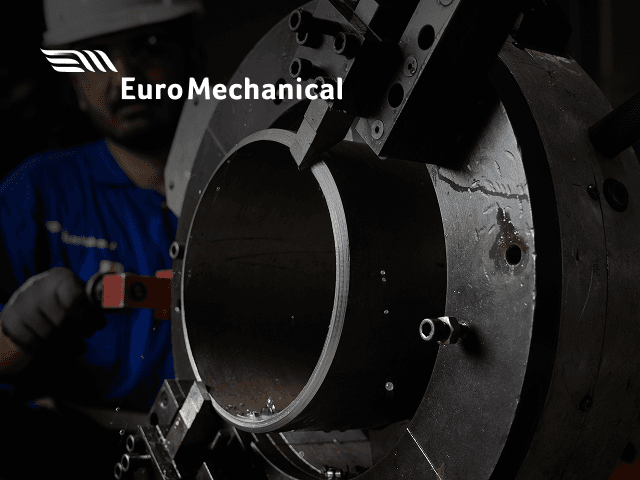
Euromechanical is an industrial engineering brand with deep technical credibility. The website had to communicate that precision and trust quickly, not through long explanation but through immediate brand perception. At the same time, the digital direction called for a premium experience shaped by richer UI interactions, animation, and parallax effects.
That alone would have been a meaningful challenge. But the site also needed to:
- load efficiently
- perform smoothly across devices
- maintain responsiveness on mobile
- move through production on an accelerated timeline
In many projects, one of those priorities gets sacrificed. Either the experience becomes flatter in order to protect performance, or the design ambition creates friction that slows the site down. Tight delivery schedules often make that trade-off worse, because rushed projects tend to lose discipline in either UX or implementation quality.
In the Euromechanical case, the solution was not to simplify the ambition. It was to implement it more carefully.
Element8 approached the project through a modular WordPress architecture combined with a custom frontend using HTML5, CSS3, and JavaScript. That made it possible to deliver fluid transitions, visual depth, and stronger interaction behavior without abandoning performance priorities. The team also maintained an agile delivery workflow so client feedback could be absorbed quickly without destabilizing milestones.
The result was a website that helped the brand feel more precise, modern, and capable while still respecting speed and responsiveness expectations.
If you want to see the project itself, the full Euromechanical case study shows how those constraints came together in practice.
Key Lessons for Industrial and B2B Brands
There are a few broader lessons industrial brands can take from this.
First, premium UX should support credibility, not distract from it. Richer website experiences only work when they make the brand feel more controlled, more refined, and more trustworthy.
Second, speed and motion are not mutually exclusive. The right design choices and the right frontend execution can support both.
Third, mobile experience is part of the credibility equation. A website that looks polished on desktop but weak on mobile still creates a weaker business impression overall.
Fourth, implementation quality matters as much as design direction. Many businesses evaluate website concepts visually but underestimate how much the frontend determines the final result.
Fifth, compressed timelines make clarity of process even more important. If a project needs to move quickly, the team must be aligned on which interactions matter, where performance discipline is essential, and how feedback will be absorbed without rework spiraling out of control.
These are not just web production lessons. They are brand perception lessons.
Performance and UX Should Work Together
Industrial brands do not need to settle for a choice between speed and experience.
The better goal is a website that feels premium because it is well designed, and performs well because it is well built. That combination matters for brand trust, user engagement, and how confidently a business presents itself online.
For companies in industrial, engineering, and B2B sectors, that balance is not a cosmetic upgrade. It is part of how digital credibility is established.
If you want to explore how this works in a real project, see the full Euromechanical case study. If your business needs a more premium user experience without compromising performance, talk to element8.
FAQs
Can an industrial website use animation without becoming slow?
Yes. Animation becomes a performance problem when it is used carelessly or implemented poorly. Selective motion, lightweight transitions, optimized assets, and disciplined frontend code can support a premium experience without significantly harming speed.
What affects website performance most in modern B2B web design?
Performance is influenced by several factors, including image handling, CSS and JavaScript delivery, frontend architecture, mobile responsiveness, animation behavior, and how efficiently assets are loaded. The issue is usually not one visual effect by itself, but the overall quality of implementation.
Why is mobile performance important for industrial websites?
Mobile performance affects how users experience the brand outside desktop environments. Decision-makers, engineers, and commercial teams may first encounter the website on phones or tablets. A poor mobile experience can weaken trust even if the desktop site is strong.
Can WordPress still support a premium industrial website?
Yes. WordPress can support a strong industrial website when the frontend is implemented carefully. The CMS alone does not determine quality. The architecture, design system, and frontend execution determine whether the final experience feels premium and performs well.
What makes an industrial website feel modern and credible?
Modern industrial websites combine clarity, strong visual hierarchy, responsive behavior, fast performance, and well-controlled interaction design. Credibility comes from how precisely the experience is executed, not from adding effects for their own sake.