
Web Design Abu Dhabi: The 2026 Guide to the Capital's Market



Web design in Abu Dhabi is shaped by the capital’s biggest buyers: government and semi-government entities, cultural institutions, the ADGM financial ecosystem, and large industrial groups. Choosing a web design partner in Abu Dhabi therefore means finding a team that can meet formal digital standards, deliver Arabic-first experiences, and handle structured procurement — not just produce an attractive homepage. This guide explains how the Abu Dhabi market works in 2026, how projects here differ from Dubai, what to expect on process and budget, and how to evaluate agencies serving the capital — whether they are based in Abu Dhabi itself or, like Element8, in Dubai serving clients across all seven emirates.
What Makes the Abu Dhabi Web Design Market Different?

Abu Dhabi is not simply a smaller version of the Dubai market. It is the seat of the federal government, home to some of the region’s largest sovereign and semi-government organizations, and the centre of the UAE’s energy, industrial, and cultural investment programmes. That mix changes what “good web design” means in practice.
Three characteristics stand out:
- Institutional buyers dominate. A large share of significant web projects in the capital come from government departments, semi-government entities, and large corporates rather than from small businesses. These buyers procure formally, evaluate vendors on capability and track record, and expect documentation at every stage.
- Standards are explicit. Abu Dhabi’s digital government agenda — with unified service platforms such as TAMM and federal enablers like UAE PASS — has raised the baseline. Entities increasingly expect websites to follow established design systems, meet accessibility guidelines, support Arabic as a first-class language, and integrate with government identity and service layers where relevant.
- Projects tend to be deeper, not just wider. A typical engagement is less likely to be a quick brochure site and more likely to involve service journeys, content governance, multilingual publishing workflows, and integration with internal systems.
Government and Semi-Government Digital Standards in Abu Dhabi
If your organization operates in or sells to the public sector in the capital, your website will be judged against the emirate’s digital government benchmarks. In practice, that means several recurring requirements:
- Arabic-first, genuinely bilingual design. Arabic is not a translated afterthought. Right-to-left (RTL) layouts need to be designed — not mirrored automatically — with Arabic typography, line lengths, and content hierarchy treated as a primary design problem. Bilingual content governance (who writes, reviews, and publishes each language) should be planned from day one.
- Accessibility. Government-aligned projects are expected to meet recognized accessibility standards (WCAG-based), covering contrast, keyboard navigation, screen-reader compatibility, and accessible documents.
- Identity and service integration. Where a site offers services rather than just information, integration with UAE PASS and unified service platforms is increasingly the expectation rather than the exception.
- Data protection and hosting. The UAE’s federal data protection law (PDPL) applies across the emirates, and many Abu Dhabi entities add their own information-security and hosting policies on top — often favouring in-country or approved cloud hosting and formal security review before launch.
- Documentation and governance. Expect requirements for design documentation, content style guides, testing evidence, and structured handover. Agencies used to informal, fast-moving SME work can find this discipline unfamiliar.
Even private-sector organizations in Abu Dhabi benefit from designing to these standards, because their partners, regulators, and customers are habituated to them.
Key Sectors Driving Web Design Demand in Abu Dhabi
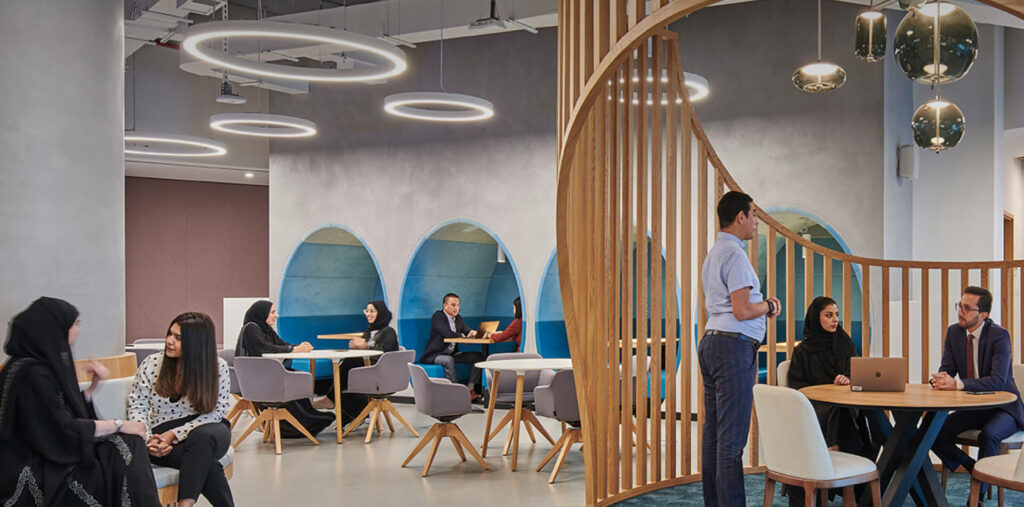
Understanding who is buying web design in the capital helps you benchmark your own project. The most active sectors in 2026 include:
| Sector | Typical web design requirements |
|---|---|
| Government & semi-government | Service portals, bilingual content platforms, accessibility compliance, UAE PASS and platform integration, strict governance |
| Culture & tourism | Rich storytelling and visual design for museums, festivals, and destinations in districts such as Saadiyat; multilingual audiences; ticketing and programme integrations |
| Financial services & ADGM ecosystem | Credibility-led corporate sites for asset managers, fintechs, and advisory firms; regulatory disclosures; fast, secure, internationally polished experiences |
| Energy & industrial | Large corporate estates, investor relations, sustainability reporting, careers platforms, multi-entity brand architecture |
| Education & healthcare | Programme and service directories, admissions or appointment journeys, bilingual content at scale |
| Startups & scale-ups (Hub71 and beyond) | Conversion-focused product sites, fast iteration, investor-ready presentation on leaner budgets |
Each sector pulls design in a different direction: a cultural institution needs editorial craft and atmosphere, an ADGM fintech needs precision and trust signals, and a government entity needs clarity, accessibility, and service reliability. A strong agency will show you work — and thinking — relevant to your sector, not a one-size-fits-all portfolio.
How Do Abu Dhabi Web Design Projects Differ from Dubai?
Dubai and Abu Dhabi share a talent pool, a currency, and a federal legal framework, so the fundamentals of good web design are the same. The differences are mostly about who buys and how:
- Procurement culture. Abu Dhabi projects are more likely to start with a formal RFP, vendor registration, or structured evaluation, and to involve procurement and IT security teams alongside marketing. Dubai’s market has a larger share of fast-moving commercial engagements led directly by founders or marketing leaders.
- Decision cycles. Capital-city projects often take longer to award but are better defined once they start. Build that lead time into your planning.
- Design sensibility. Abu Dhabi buyers frequently prioritize institutional credibility, restraint, and longevity; Dubai briefs skew slightly more toward bold, campaign-driven design. Good agencies can do both — but check the portfolio for evidence.
- Language weighting. Arabic content carries even greater weight in government and semi-government work in the capital, both in design priority and in ongoing content operations.
- Compliance depth. Security review, hosting policy, and documentation requirements tend to be more formal in Abu Dhabi engagements, especially public-sector ones.
None of this makes Abu Dhabi harder — it makes it different. Teams that respect the process tend to build longer, more stable client relationships in the capital than anywhere else in the UAE.
What Should You Expect on Process and Budget?
A professional web design engagement for an Abu Dhabi organization typically moves through discovery and stakeholder workshops, information architecture, UX wireframes, bilingual UI design, development, content migration, accessibility and security testing, and structured launch. For institutional projects, add governance checkpoints: design sign-offs, security review, and documentation handover. Depending on scope, expect a corporate or institutional project to run from roughly two to six months; complex service platforms take longer.
On budget, Abu Dhabi pricing follows the same logic as the rest of the UAE: cost scales with the depth of strategy, custom UI/UX design, bilingual content, integrations, and compliance work — not with the number of pages. Template-based small-business sites sit at the low end of the market; custom corporate and institutional platforms represent a significantly larger investment because of the discovery, design, engineering, and testing effort involved. Rather than repeating figures here, see our detailed guide to website design costs in Dubai — the ranges are broadly representative of Abu Dhabi as well, since most agencies price UAE-wide. The bigger budget difference in the capital usually comes from compliance, integration, and Arabic content scope rather than from location.
How to Evaluate a Web Design Company for Abu Dhabi Work
Whether you are shortlisting agencies based in Abu Dhabi, Dubai, or both, apply the same tests:
- Relevant sector evidence. Ask for examples of government, cultural, financial, or enterprise work comparable to yours — and ask what the agency’s actual role was on each project.
- Genuine Arabic capability. Review live bilingual projects. Check whether the Arabic experience was designed or merely translated, and who handles Arabic content quality.
- Accessibility and standards literacy. A capable partner can explain how they test against WCAG guidelines and how they approach government design-system requirements without being prompted.
- In-house engineering. Institutional projects fail most often at the integration and performance layer. Prefer agencies with a real web development team in-house rather than design shops that subcontract the build.
- Process maturity. Look for structured discovery, documented milestones, QA and security testing practices, and a clear post-launch support model.
- Procurement readiness. If you are a government or semi-government buyer, confirm the agency can meet vendor registration, documentation, and contracting requirements without friction.
Does Your Web Design Agency Need an Office in Abu Dhabi?
In most cases, no — and it is worth being direct about this. The UAE web design market operates nationally: workshops happen on-site wherever the client is, and design and engineering work happens wherever the strongest team sits. What matters is whether the agency understands Abu Dhabi’s buyers, standards, and procurement culture, and whether they will be present for the moments that matter — discovery workshops, stakeholder reviews, and launch.
Element8 is a Dubai-based agency serving clients across the UAE, including Abu Dhabi and the wider emirates. We work with capital-based organizations the same way we work with Dubai clients: on-site where it adds value, with senior designers and engineers on every engagement, and with the bilingual, standards-aware delivery that Abu Dhabi projects demand. If a local office is a hard procurement requirement for your entity, clarify that early in your RFP; for most organizations, capability and track record matter far more than the address on the trade licence.
FAQs
How much does web design cost in Abu Dhabi?
Costs in Abu Dhabi follow UAE-wide pricing: simple template sites sit at the low end of the market, while custom corporate, cultural, and government platforms require a substantially larger investment driven by strategy, bilingual design, integrations, and compliance. Our Dubai website design cost guide gives representative ranges that apply broadly to Abu Dhabi projects too.
Which is the best web design company in Abu Dhabi?
There is no single answer — the best partner depends on your sector and scope. Shortlist agencies with proven work in your industry, genuine Arabic/RTL design capability, in-house development, and experience with formal procurement. Evaluate them on relevant case studies and process maturity rather than on location or portfolio volume alone.
Can a Dubai-based web design agency handle Abu Dhabi projects?
Yes. Most established UAE agencies, including Element8, serve clients nationally, attending workshops and reviews in Abu Dhabi while designing and building from their main studio. Unless your entity’s procurement rules specifically require an Abu Dhabi-registered vendor, capability, sector experience, and delivery track record should outweigh office location.
How long does a website design project take in Abu Dhabi?
A typical corporate or institutional website takes around two to six months from discovery to launch, depending on scope, integrations, and stakeholder review cycles. Government and semi-government projects often add time for security review, accessibility testing, and documentation, so build those governance stages into your timeline from the start.
Do Abu Dhabi websites need to be in Arabic?
For government, semi-government, and most institutional organizations, a fully designed Arabic experience is effectively mandatory — and it should be designed right-to-left from the outset, not machine-translated. Private businesses serving international audiences have more flexibility, but bilingual sites consistently perform better with local customers, partners, and search visibility in the UAE.
If you are planning a website for an Abu Dhabi-based organization, Element8’s Dubai team works with clients across the capital and the wider UAE — get in touch for a straightforward conversation about your scope, standards, and budget.