
Sitecore Implementation Partners in the UAE: How to Evaluate a Vendor for Listed-Company Builds



For a publicly traded or listed company in the UAE, a corporate website, investor relations portal, or customer-facing digital experience platform (DXP) is more than just a marketing asset. It has now become a business-critical piece of financial infrastructure. Operating under the continuous scrutiny of regulatory bodies such as the Securities and Commodities Authority (SCA), Abu Dhabi Securities Exchange (ADX), and Dubai Financial Market (DFM), listed entities face unique challenges and risks. A single minute of unannounced downtime can compromise market integrity, spark governance crises, and erode investor confidence. Similarly, a small data breach can lead to severe regulatory penalties and permanent reputational damage.
To mitigate these risks, enterprise-level organizations around Dubai and Abu Dhabi consistently choose Sitecore. Known for its enterprise scalability, multi-layered security protocols, and advanced personalization engines, Sitecore can offer a stronger foundation that listed companies require. Even though deploying such an advanced platform can introduce a second critical challenge, that is, the UAE market is flooded with digital agencies, and a few are technically or operationally equipped to handle the rigorous engineering, compliance, and governance demands of a public company.
Evaluating a vendor for a listed company can require a sophisticated framework that looks beyond marketing pitches and generic portfolios. In this guide, we outline the non-negotiable criteria that Enterprise Chief Technology Officers (CTOs), Chief Digital Officers (CDOs), and procurement heads should use to select a Sitecore implementation partner in Dubai capable of delivering secure, fully compliant, and future-proof digital infrastructure.
Key Evaluation Criteria for UAE Listed Companies
Evaluating a prospective Sitecore partner will require assessing structural capabilities, regional compliance readiness, architectural philosophy, and long-term support engineering capabilities.
Partner Tier and Certified Local Talent
The difference between a general digital agency and a certified enterprise integrator lies in official accreditation status and access to engineering talent.
- Verify Through Official Channels: Digital transformation leaders should bypass sales collateral and verify vendors’ standing via the official Sitecore Partner Finder. Focus your evaluation on partners holding Platinum, Gold, or Strategic Global Appliance tiers. These designations can confirm that the vendor maintains a deep pool of certified talent and a verified track record of successful enterprise deployments.
- The Local Talent Mandate: An enterprise architecture cannot really rely entirely on offshore teams managed across disparate time zones. For a listed entity, critical architectural design and deployment management should be overseen by a dedicated, in-house team of Sitecore Certified Developers and Solution Architects based regionally. Local engineering enables immediate collaboration during high-stakes development phases and ensures that the professional architecting your platform understands the local infrastructure landscape.
Regulatory Compliance & Data Sovereignty (The UAE Landscape)
Operating a digital platform for a listed company in the UAE means adhering to a strict, multi-layered regulatory framework. The partner you select must demonstrate a profound understanding of local compliance frameworks.
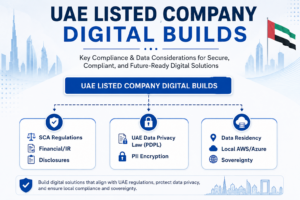
- Regulatory Alignment: Your platform must strictly comply with SCA regulations concerning corporate disclosures, financial reporting transparency, and investor relations governance.
- The UAE Data Protection Law: The UAE Federal Decree-Law No. 45 of 2021 on Personal Data Protection (PDPL) imposes stringent guidelines on the collection, processing, and storage of Personally Identifiable Information (PII). Your chosen Sitecore partner in the UAE must demonstrate their ability to design architectures that comply with these legal mandates.
- Sovereign Cloud Deployments: Enterprise vendors must have documented experience deploying Sitecore within highly secure, sovereign cloud environments. This includes provisioning and managing local instances within the UAE-specific data regions of Microsoft Azure or Amazon Web Services (AWS). Ensuring that data residency remains within national borders is a critical legal and governance requirement for listed enterprises. Enterprise organizations operating in highly regulated UAE sectors can also explore how Element8 supported Empower’s digital transformation initiatives by delivering enterprise-grade digital infrastructure tailored to regional operational requirements. For enterprises evaluating sovereign hosting infrastructure in the UAE, our comparison of AWS vs Azure for UAE website hosting explains the performance, compliance, and scalability considerations relevant to regulated enterprise deployments.
Composable DXP & Modern Architecture Expertise
The enterprise CMS ecosystem has transformed past monolithic architecture and framework. Legacy deployments of Sitecore Experience Platform (XP) are rapidly giving way to agile, cloud-native solutions. Enterprises evaluating CMS ecosystems should also understand how modern CMS platforms compare in scalability, governance, and digital agility. Our guide on choosing the right CMS for your business outlines the strategic factors enterprises should evaluate before selecting a DXP platform.
- Embracing the Composable Era: Modern digital strategies require an architecture built on microservices, API-first connectivity, cloud-native SaaS, and headless content delivery (MACH principles).
- The Technical Stack Audit: When evaluating an enterprise DXP vendor in Dubai, test their capabilities within Sitecore’s modern SaaS ecosystem, specifically:
- Sitecore XM Cloud: For cloud-native, agile, and headless content management.
- Sitecore Content Hub: For centralized, enterprise-wide digital asset management (DAM) and operations.
- OrderCloud & Sitecore Discover: For highly secure, AI-driven digital commerce and search personalization.
- Avoiding Monolithic Lock-In: Disqualify vendors that attempt to lock your enterprise into outdated monolithic setups simply because their teams lack certifications in modern JavaScript frameworks (Next.js, React, or Vue.js) or headless deployment experience. A modern, composable Sitecore development deployment in Dubai ensures faster rendering times, reduced infrastructure overhead, and the agility to swap components as business needs change. Enterprise organizations evaluating modern composable digital ecosystems can also review how Element8 delivered scalable digital experiences for institutions such as Carnegie Mellon University in Qatar (CMU-Q), where enterprise-grade performance, usability, and long-term scalability were critical requirements.
Mission-Critical Enterprise Integration
A listed company’s website or portal cannot operate as an isolated silo. It serves as the digital front end for a complex network of legacy and modern enterprise systems.
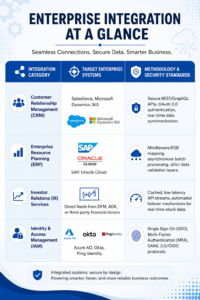
Your implementation partner must demonstrate a proven methodology for API-first architecture, ensuring that all data exchanges are encrypted, authenticated, and optimized for minimal latency. Element8 has also delivered enterprise-scale digital transformation solutions for organizations such as Alef Education, showcasing expertise in scalable architecture, system integration, and high-performance digital ecosystems.
Localized SLA & Post-Launch Managed Services
The completion of a development project cycle can mark the beginning of a platform’s true operational lifecycle. For a listed entity, post-launch governance is a matter of corporate risk management.
- Beyond the 8-to-5 Desk: Standard business-hour support models are inadequate for public companies. The vendor must offer a binding Service Level Agreement (SLA) that provides true 24/7/365 proactive monitoring, threat mitigation, and incident response.
- Regional Operational Nuance: The support structure must be staffed by a localized, UAE-based support desk. This ensures that the engineers managing your platform operate within the regional workweek (Monday to Friday, aligning with DFM/ADX trading schedules), have deep familiarity with regional cyber-threat vectors, and possess native bilingual capabilities (Arabic and English) to manage regional content delivery networks and localized multi-site instances smoothly.
Landscape Overview: Sitecore Partners in the UAE
Navigating the enterprise vendor ecosystem in the Gulf region requires understanding how different service providers position themselves, enabling procurement teams to balance technical capability against operational agility.
Global Systems Integrators (GSIs)
Large-scale global integrators like Avanade and Horizontal Digital excel at managing highly complex, multi-region deployments spanning continents. They offer extensive corporate resources and standard global frameworks. However, this model often introduces challenges for regional enterprises, including premium pricing, slower operational turnaround times, and reliance on cross-border offshore delivery centers that lack local regulatory insight.
Specialized Regional Agencies
Regional agencies understand the local cultural context and the requirements for bilingual UX well. They are often highly agile and offer faster time-to-market. However, smaller localized agencies frequently lack the deep engineering talent, security certifications, and enterprise infrastructure experience required to manage a high-stakes, multi-system Sitecore deployment for a major public organization.
The Element8 Positioning Advantage
As an established leader in enterprise website development in the UAE, Element8 bridges the gap between these two models. We provide the comprehensive technical competence, certified architectural rigor, and complex system integration capabilities typical of a GSI. Concurrently, we maintain an agile, highly accessible corporate structure based right here in Dubai. This enables us to deliver rapid, localized deployment, native bilingual support, and execution tailored strictly to the regulatory realities of the UAE market.
The Practical Evaluation Process: A Step-by-Step Framework
To systematically eliminate execution risk, procurement and technology leaders should deploy this three-step evaluation framework during the final vendor selection phase.
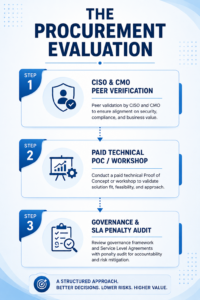
Step 1: Peer-Level Reference Checks
Do not rely only on sanitized, anonymous case studies or written testimonials. Insist that prospective partners introduce your leadership team to the Chief Information Security Officers (CISOs), Chief Marketing Officers (CMOs), or Heads of Digital at a minimum of three regional enterprise clients. You can also ask direct questions about the vendor’s post-launch stability, code quality, patch deployment speed, and communication transparency during critical system anomalies.
Step 2: Commission a Paid Technical Proof-of-Concept (PoC)
Before entering into a long-term contract, which can involve significant capital allocation, initiate a brief, paid architectural workshop or a micro-PoC. Ask the vendor’s engineers to build a small functional component, such as a secure API connection between a headless Sitecore XM Cloud instance and a simulated internal CRM or local data environment. This process will allow your technical leadership to evaluate the actual engineering team assigned to your account, assessing their code standards, DevOps maturity, and problem-solving velocity under real-world conditions.
Step 3: Audit the Implementation & Governance Framework
A successful enterprise project requires clear structural boundaries. Ensure that the definitive contract explicitly details the following components:
- Comprehensive, component-level architectural blueprints.
- Automated DevOps and Continuous Integration/Continuous Deployment (CI/CD) pipelines with integrated security scanning.
- Mandatory, exhaustive documentation handovers to prevent vendor lock-in.
- Milestone-based delivery schedules tied to clear financial SLA penalties for unexcused timeline slippage or architectural defects.
Future-Proofing Enterprise Digital Infrastructure with the Right Sitecore Partner
Selecting a Sitecore implementation partner in Dubai for a listed company is a major exercise in risk mitigation and strategic positioning. By prioritizing verified partner tiers, local engineering talent, modern composable architecture, and a deep understanding of UAE data regulations, enterprise leaders can transform their digital presence from a potential vulnerability into a powerful engine of corporate growth.
Planning a migration to Sitecore XM Cloud or launching a new enterprise build in the UAE? Contact Element8’s enterprise architecture team today for an in-depth technical consultation. Let us show you how we engineer highly secure, fully compliant, and scalable digital platforms tailored for the region’s premier corporate entities.
FAQs
How do I verify a Sitecore partner’s credentials in Dubai?
Objectively verifying vendors’ credentials and consulting the official Sitecore Partner Finder portal are two ways to do so. Filter search parameters by the United Arab Emirates region and focus on companies holding Platinum, Gold, or Strategic Global Alliance tiers. Always ask the vendor for a verifiable roster of their locally based Sitecore Certified Developers and Solutions Architects, along with their specific individual certification tracking numbers.
Does Sitecore support compliance with the UAE Data Protection Law?
Yes, Sitecore fully supports compliance with the UAE Data Protection Law (Federal Decree-Law No. 45 of 2021) when implemented correctly. By utilizing a modern, headless, or Composable DXP architecture, your engineering partner can isolate, process, and encrypt Personally Identifiable Information (PII) within local sovereign cloud environments (such as AWS or Microsoft Azure data regions in the UAE). This setup fulfills all local data residency mandates and SCA oversight guidelines.
What is the difference between legacy Sitecore XP and modern Sitecore XM Cloud for UAE enterprises?
Legacy Sitecore XP is a monolithic, all-in-one platform requiring substantial infrastructure management, custom database tuning (SQL/MongoDB), and manual scaling. Conversely, Sitecore XM Cloud is a fully managed, cloud-native SaaS content management system. For UAE enterprises, XM Cloud separates the content creation environment from the presentation layer. It delivers headless content globally via lightning-fast Content Delivery Networks (CDNs) while allowing your local team to integrate regional security components and APIs seamlessly, reducing maintenance overhead and accelerating time-to-market.
Why should a listed company in the UAE choose a localized Sitecore implementation partner over an offshore agency?
A localized partner brings specialized knowledge of the regional regulatory environment, including direct familiarity with SCA, ADX, and DFM disclosure guidelines. They design bilingual (Arabic/English) architectures natively rather than treating them as an afterthought. Crucially, a local partner provides engineering teams operating within the regional time zone (GMT+4), ensuring immediate, on-the-ground support during regular UAE trading and business hours, thereby dramatically reducing critical incident response lag.