
Arabic UX Done Right: RTL, Bilingual SEO, and Conversion UX for UAE Audiences


Walk through most “bilingual” websites in the UAE, and you’ll notice the same thing: an English site, translated, with the text pointed the other way. The logo sits where it always sat. The navigation follows the English information architecture. The form fields still validate like an English form. Someone flipped a dir=”rtl” switch and called it done.
That’s not an Arabic website. It’s an English website wearing an Arabic costume, and UAE users notice immediately, even if they can’t articulate why the page feels slightly off.
With internet penetration in the UAE sitting at roughly 99% of the population, nearly everyone your business wants to reach is already online, in both languages, comparing your site against ones that got this right. For a market where Arabic is the official language and English is the language of business, the gap between “translated” and “properly bilingual” is one of the most under-addressed UX and SEO problems in Dubai web design.
This guide covers what real RTL design requires technically, the five mistakes we see most often, how to structure bilingual SEO so both language versions actually rank, and why all of this ties directly to conversion, not just aesthetics.
What RTL Actually Means
Right-to-left design is a layout and interaction system, not a single CSS attribute. Setting dir=”rtl” flips text direction, but a genuinely mirrored Arabic experience goes much further:
- Navigation mirrors: primary menus, breadcrumbs, and back buttons move to the side Arabic readers scan from first.
- Icons mirror: a “next” arrow, a play button, a progress indicator anything with implied direction needs to flip.
- Forms mirror: label alignment, input direction, and validation messages all need to read naturally in Arabic, not as an English form with Arabic labels bolted on.
- Sliders and carousels mirror: swipe and click behavior should follow RTL reading order, not the LTR default most component libraries ship with.
The modern, maintainable way to build this is with CSS logical properties — margin-inline-start instead of margin-left, padding-inline-end instead of padding-right so a single stylesheet adapts to both directions instead of maintaining parallel LTR and RTL CSS files. This is exactly the kind of build discipline we bring to every project through our web development services in Dubai: RTL support is planned into the architecture from day one, not patched on afterward.
Five Arabic UX Mistakes Dubai Websites Keep Making
Translating the English site instead of designing for Arabic readers. The single biggest mistake. Content, layout, and hierarchy get built for an English-first mental model, then Arabic copy is dropped into the same containers. Real bilingual UX starts with Arabic as a first-class design input, not an afterthought layered on top.
Ignoring text expansion and contraction. Arabic strings can run meaningfully longer or shorter than their English equivalents depending on the content. A button or label sized for English text will clip, wrap awkwardly, or compromise the design in Arabic if this isn’t tested at the design stage.
Using Latin-optimized typography for Arabic body copy. Fonts designed primarily for Latin scripts often render Arabic poorly — weak stroke contrast, cramped joins, inconsistent x-height. Typefaces such as Tajawal, Cairo, or IBM Plex Sans Arabic are built for legibility in Arabic and are a safer default for commercial UAE sites.
Auto-switching language based on browser or IP detection. Plenty of UAE residents and visitors prefer to browse in English even though Arabic is available, or vice versa — auto-detection guesses wrong often enough to frustrate users. Language should be an explicit, visible, remembered choice, not an assumption made on their behalf.
Treating the language switcher as a footer afterthought. If switching language takes more than one click from anywhere on the site, it’s not a real bilingual experience — it’s an English site with an Arabic subsite bolted underneath it.
Bilingual SEO: Getting Arabic and English Pages to Both Rank
Good Arabic UX means nothing if Google can’t find and correctly index both language versions. Bilingual SEO for the UAE market comes down to three decisions:
URL structure. Subfolders (/en/, /ar/) are generally the most practical and SEO-friendly structure for most UAE businesses, easier to manage than subdomains, and they consolidate domain authority in one place rather than splitting it across a ccTLD or separate domain.
hreflang implementation. Every page needs to tell Google which language/region version it is, and point to its equivalent. A minimal, correct hreflang block looks like this:
<link rel="alternate" hreflang="en-ae" href="https://example.ae/en/page" />
<link rel="alternate" hreflang="ar-ae" href="https://example.ae/ar/page" />
<link rel="alternate" hreflang="x-default" href="https://example.ae/en/page" />
Each language version should self-reference and reciprocally reference its counterpart; missing or one-directional hreflang tags are one of the most common technical SEO faults we find on bilingual UAE sites during audits.
Real Arabic keyword research, not translated English keywords. Arabic searchers don’t always search the literal translation of an English term; search behavior, phrasing, and even which script (Arabic vs. transliterated Latin script) gets used varies by industry and audience. Treating Arabic SEO as “translate the English keyword list” routinely leaves ranking opportunity on the table. This is a core part of how we approach SEO in Dubai for bilingual clients: Arabic and English keyword strategies are researched and mapped separately, not derived from one another. We go deeper on the broader 2026 UAE SEO landscape in our guide to SEO in Dubai for 2026.
One more trap worth naming: running Arabic content through machine translation and publishing it as-is creates near-duplicate, low-quality content in Google’s eyes, and it reads as inauthentic to Arabic-speaking visitors. If Arabic is a market you’re serious about, it deserves native-level content, not a translation layer.
Choosing the Right Platform for Bilingual Delivery
The CMS underneath a bilingual site determines how painful (or painless) ongoing Arabic content management becomes. On WordPress, plugins such as WPML or Polylang are the standard route, but they need to be configured with the correct URL structure and hreflang output from the start. Retrofitting proper bilingual SEO onto a site that’s been running with a broken plugin setup for years is a much bigger job than building it correctly the first time. For headless or custom-built platforms, frameworks like Next.js have mature internationalization (i18n) routing that handles locale-based URLs and content resolution cleanly, which is one reason we lean on it for larger bilingual builds — we cover the broader case for headless architecture in our guide to modern WordPress and headless website design in Dubai.
Whichever platform is in play, the same rule applies: content editors need a workflow that lets them manage English and Arabic versions of a page side by side, not as two disconnected sections of the site that drift out of sync with each other over time.
Arabic Typography & Readability
Beyond font choice, Arabic body text needs different spacing rules than Latin text. Line-height that looks correct for English often feels cramped for Arabic script because of how letters join and how diacritics (when used) sit above and below the baseline. Letter-spacing (tracking) adjustments that are safe in English can actually break Arabic letterforms, since Arabic is a cursive, joined script; arbitrary letter-spacing can disconnect letters that are supposed to connect. Matching font size 1:1 between Latin and Arabic type also isn’t a safe assumption; Arabic often needs a slightly different size to read at equivalent visual weight to its English counterpart.
Numbers, Forms, and Small Details That Break Trust
The details that seem trivial are often what make a bilingual site feel native or feel translated:
- Numerals: Western Arabic numerals (1, 2, 3) are the standard for prices, phone numbers, and dates across most commercial UAE and GCC websites. Eastern Arabic numerals (١، ٢، ٣) read as more traditional in certain contexts but can create friction in checkout flows and forms if used inconsistently. Pick one system for functional numbers and apply it consistently; don’t mix the two on the same page.
- Form direction: input fields, placeholder text, and validation/error messages all need to align and read correctly in RTL. A form that types right-to-left but validates with an English-style left-aligned error message feels broken.
- Dates and phone numbers: format conventions differ from English defaults and should be handled deliberately, not left to a default library setting built for a Western locale.
Cultural UX: Localization Is Not Just Language
Localization goes beyond the words on the page. Imagery, color associations, and messaging tone all carry cultural weight in the UAE market, and content that feels generic or visibly “stock Western” undermines trust with Arabic-speaking audiences even when the translation itself is accurate. Trust indicators matter too — local contact details, Arabic-language customer support, and familiar contact channels all signal that a business is genuinely present in the market, not just translating for it.
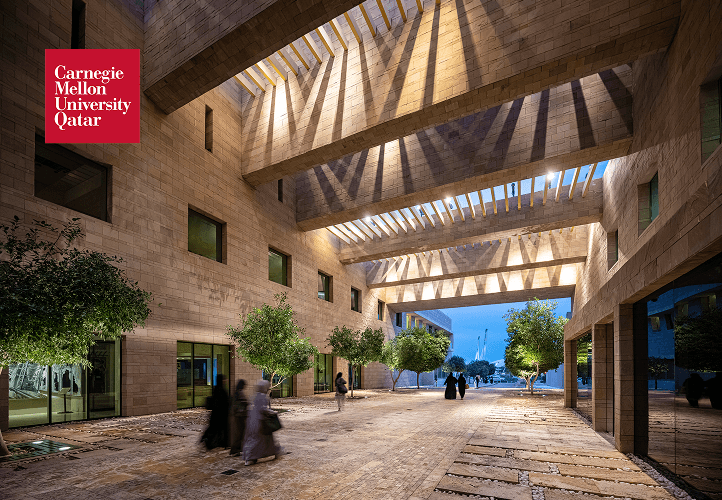
This is exactly where applied experience matters more than theory. On our Saadiyat Island project, the brief centered on a clean, intuitive interface in both English and Arabic that reflected the destination’s luxury positioning in either language, and the redesign contributed to a 47% reduction in bounce rate. On a larger scale, our 200-plus page bilingual platform for Carnegie Mellon University Qatar needed a content architecture that worked natively in both languages across a large institutional site a project that went on to see 3x growth in organic visibility. Both are proof that bilingual UX done properly is a measurable business lever, not just a design nicety.
From Arabic UX to Conversions: Why This Isn’t Just a Design Exercise
Every mistake above has a downstream cost. A mistranslated or mistranslated-feeling form reduces completion rates. A language switcher buried in the footer increases bounce rate for the audience segment that wanted the other language. A layout that feels “flipped” rather than “designed” reads as lower trust, and trust is the entire game before someone submits an inquiry.
This matters even more given how UAE audiences actually make contact. Click-to-WhatsApp is one of the dominant inquiry channels in the UAE market, often outperforming traditional contact forms for speed and completion rate. A bilingual site that gets RTL and Arabic UX right should extend that same discipline to its conversion points. A WhatsApp CTA that’s positioned correctly and labeled naturally in both languages will consistently outperform one that’s simply mirrored from the English layout without a second thought. If you’re rethinking how your site converts UAE traffic into conversations, it’s worth treating WhatsApp-first conversion design as part of the same bilingual UX exercise, not a separate initiative bolted on afterward.
Quick Decision Checklist: Is Your Website Truly Bilingual?
If you answer yes to any of these, your site likely needs an Arabic UX and bilingual SEO review:
- Your Arabic pages were built by translating existing English pages rather than designing for Arabic readers from the start.
- Your language switcher takes more than one click to find or use.
- You’re not sure whether your hreflang tags are implemented correctly (or whether they exist at all).
- Your Arabic content was machine-translated and never reviewed by a native speaker.
- You mix Eastern and Western Arabic numerals inconsistently across the site.
- Icons, sliders, or navigation don’t mirror in the Arabic version.
- You’ve never separately researched Arabic keywords only translated your English keyword list.
FAQs
What is RTL design in web development?
RTL (right-to-left) design is the practice of building a website’s layout, navigation, icons, and interactions to flow from right to left, matching how Arabic (and other RTL languages) are read, not simply flipping text direction while leaving the rest of the interface built for a left-to-right reading pattern.
Do Arabic and English pages need separate URLs?
Yes. Each language version should have its own indexable URL (commonly under /en/ and /ar/ subfolders), with correct hreflang tags linking them together so Google can serve the right version to the right audience.
Which font is best for Arabic websites?
Fonts purpose-built for Arabic legibility, such as Tajawal, Cairo, or IBM Plex Sans Arabic, generally render more clearly than Latin-first fonts with basic Arabic character support, particularly for body copy at smaller sizes.
Does Google rank Arabic and English content separately?
Yes, each language version is treated as its own indexable page. Correct hreflang implementation is what tells Google which version to serve to Arabic-speaking versus English-speaking searchers, and prevents the two versions from being seen as duplicate or competing content.
Is Arabic translation the same as Arabic localization?
No. Translation converts words from one language to another; localization adapts layout, imagery, cultural references, typography, and UX patterns so the experience feels native to Arabic-speaking users. Translation is one input into localization, not a substitute for it.