

WhatsApp-First Website Design in UAE: Turn Traffic Into Qualified Leads
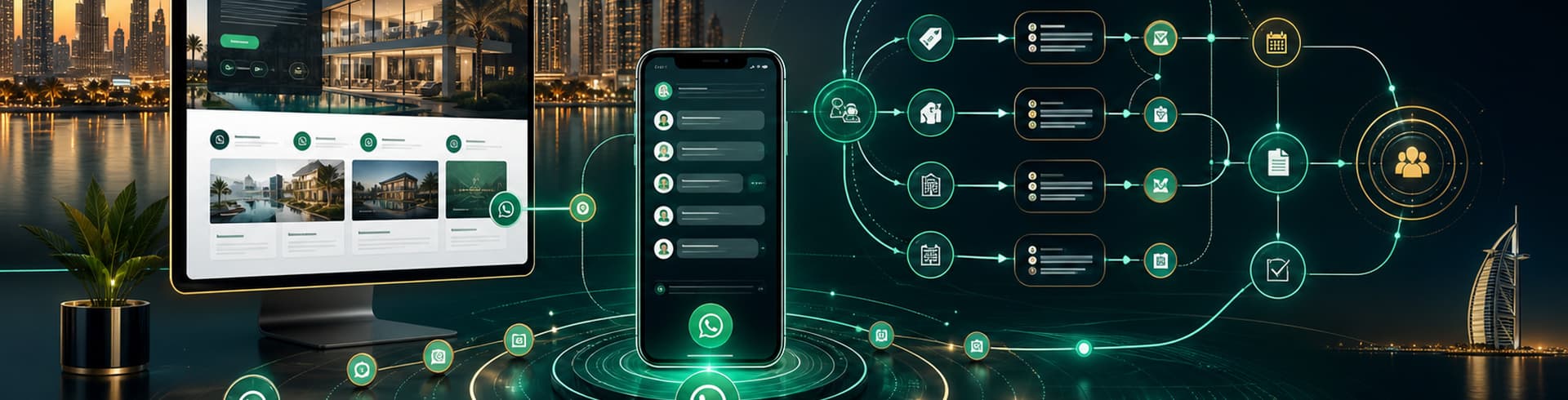


Many UAE websites have WhatsApp on them. Far fewer are actually designed around it.
That difference matters. A floating icon in the corner is not the same thing as a conversion strategy. On many business websites, WhatsApp is treated like an add-on: dropped into the interface late, disconnected from page intent, badly placed on mobile, and never measured properly. The result is usually more chat noise, not better leads.
In the UAE, WhatsApp often sits much closer to the decision point than it does in many other markets. For many users, especially on mobile, it feels faster, more direct, and more trustworthy than filling out a long contact form and waiting for a reply. That does not mean every website should replace forms with chat. It means serious websites should understand when WhatsApp should lead, when it should support, and how to make it work as part of a designed enquiry journey.
This guide explains how WhatsApp-first website design should work for UAE businesses, where most websites get it wrong, and how to turn traffic into qualified conversations instead of low-intent chat volume.
Why WhatsApp Matters More on UAE Websites Than in Many Other Markets
The UAE is a mobile-first, fast-response market. Users are used to quick communication, direct contact, and immediate follow-up. In many industries, especially services, real estate, education, clinics, training, consulting, and local lead generation, WhatsApp feels like the most natural next step after interest.
That matters because conversion behavior is shaped by local expectation, not by generic website best practice. A website built around the assumption that users are happy to submit a form and wait a day for a response may underperform in a market where users expect a much faster path.
There is also a trust layer here. For many visitors, WhatsApp feels more human than a generic enquiry form. It suggests the business is reachable, active, and ready to respond. In a competitive market like Dubai, that perception matters.
Language behavior adds another layer. Some users browse in English but want fast conversational contact. Others search and browse in Arabic and expect the CTA, message flow, and response path to feel natural in Arabic from the start. This is one reason Arabic UX design UAE should be considered part of conversion planning, not a separate visual decision.
WhatsApp Is Not a Widget, It Is a Conversion Path
One of the most common mistakes businesses make is treating WhatsApp as a button rather than a path.
A button only asks, “Can the user click this?” A conversion path asks more important questions:
- Why would the user click here instead of somewhere else?
- What level of intent do they already have?
- What question are they trying to answer?
- What happens after the click?
- Does this path improve lead quality or only increase message volume?
A WhatsApp CTA on a high-intent service page should not behave the same way as one on a blog article. A visitor comparing agencies may want a quick pre-sales conversation. A procurement-driven enterprise visitor may still need a structured form first. The goal is not to put WhatsApp everywhere. The goal is to use it where it lowers friction without lowering lead quality.
That is the difference between adding a widget and designing a journey. It is also the kind of thinking businesses should expect from a web development company in Dubai that understands conversion, not just interface assembly.
When WhatsApp Should Be the Main CTA
WhatsApp works best when the user wants speed, reassurance, or a quick first step.
It should often lead when:
- the enquiry is service-based and relatively straightforward
- the visitor is likely to be on mobile
- the page is targeting local or high-intent traffic
- the business benefits from rapid response
- the next best step is a short conversation rather than a long form
This is especially effective on service pages, campaign landing pages, consultation pages, local pages, and urgent enquiry journeys. In these cases, WhatsApp can reduce friction significantly because it feels immediate and familiar.
For example, a user looking for website redesign help, SEO consultation, or local digital support may be far more likely to start a conversation through WhatsApp than complete a form with multiple fields. The faster path often wins, especially when the user is already close to intent.
But that only works if the CTA is specific. “Chat with us” is usually weak. “Ask about your website project on WhatsApp” is stronger because it gives the user clearer context and intent.
When Forms Should Still Lead
WhatsApp is powerful, but it is not automatically the right primary CTA on every page.
Forms should often lead when:
- the enquiry needs structured information from the start
- the sales process involves multiple stakeholders
- the business operates in a regulated or documentation-heavy category
- internal teams need lead data in a standard format before follow-up
- the enquiry is complex enough that more upfront detail improves response quality
This is especially relevant for enterprise, procurement, institutional, or technically detailed sales journeys. In those cases, WhatsApp can still support the path, but it may work better as a secondary CTA, a fallback option, or a faster follow-up channel after initial form submission.
The real decision is not “WhatsApp or forms?” It is “What contact path fits the intent and complexity of this page?”
Strong UAE websites often use both. They simply do not give them the same role everywhere.
Best WhatsApp CTA Placements on a UAE Website
Placement matters because users do not behave the same way on every page.
The strongest placements are usually:
- a sticky mobile CTA on high-intent pages
- a hero CTA on service or campaign pages
- a mid-page CTA after an offer, proof point, or benefits section
- a contact page CTA with clear language continuity
- a local or location-page CTA where urgency and convenience matter
- a post-form fallback for visitors who want a faster option
The weakest pattern is usually overuse. If every page carries the same floating button with the same message and no page logic, the CTA stops feeling helpful and starts feeling generic.
Good placement should feel intentional. A service page visitor may want a quick conversation after understanding the offer. A blog visitor may only want WhatsApp after reading enough to trust the business. A mobile user may need easier thumb-level access than a desktop user. Those differences matter.
Common WhatsApp UX Mistakes That Lower Lead Quality
Most WhatsApp conversion problems come from weak UX logic, not from the tool itself.
Using the same CTA everywhere
A homepage visitor, a pricing-page visitor, and a blog reader do not have the same intent. Using the same CTA across all of them usually reduces relevance.
Sending users into a blank conversation
A blank message creates friction. A better setup uses pre-filled prompts that reflect the page the visitor came from.
Treating clicks as success
A click is not the same as a qualified lead. If the business only measures click volume, it can confuse activity with performance.
Ignoring routing and ownership
If all messages go to one unmanaged number with no team logic or handoff process, response quality drops quickly.
Poor mobile placement
If the CTA overlaps content, sits too low, or interrupts reading, users are less likely to trust it.
Weak Arabic and English continuity
If the page is in Arabic but the WhatsApp path feels English-first, or vice versa, the experience feels inconsistent.
Arabic and English UX Considerations for WhatsApp Conversion
On bilingual UAE websites, WhatsApp design needs the same discipline as the rest of the journey.
CTA wording should feel native in each language, not mechanically translated. A literal translation may be understandable but still weaker than natural conversion copy. The page language and the WhatsApp entry should also feel continuous. If a visitor browses in Arabic, the next step should not suddenly feel structurally or linguistically English.
Placement matters too. On RTL layouts, users scan differently. CTA grouping, icon direction, and button alignment should feel natural within the Arabic interface, not mirrored as an afterthought. This is where lessons from Arabic UX design UAE become commercially important. The issue is not only aesthetics. It is whether the conversion path feels trustworthy and complete.
For many UAE businesses, Arabic and English users may also behave differently in what they ask, how much reassurance they want, and how they interpret tone. That means WhatsApp-first conversion should be designed as a bilingual UX problem, not just a messaging feature.
How to Improve Lead Quality, Not Just Chat Volume
More WhatsApp clicks do not automatically mean better business outcomes. Better leads usually come from better design around the click.
Practical improvements include:
- using page-specific CTA copy
- adding pre-filled messages tied to user intent
- routing chats by service or department
- setting clear expectations around response time
- matching CTA type to page purpose
- avoiding aggressive placement on low-intent pages
For example, a general “Message us on WhatsApp” CTA is usually weaker than “Discuss your website requirements on WhatsApp” on a service page. A local page may perform better with a location-aware prompt. A consultation page may benefit from a message that frames the conversation around project scope, timing, or budget.
The more closely the CTA reflects what the visitor is trying to do, the more likely the resulting chat is to be useful.
Tracking WhatsApp Properly
If WhatsApp is part of the conversion path, it should be measured like one.
At minimum, businesses should track:
- WhatsApp click events in GA4
- the page where the click happened
- device type
- CTA position
- campaign source where relevant
A better setup goes further and connects chat initiation to lead quality. Which pages generate real enquiries? Which CTA placements create useful conversations? Which language journey performs better? Which campaign sources bring low-intent clicks versus serious leads?
This is where conversion design overlaps with search visibility. If a page ranks well but sends poor-quality WhatsApp traffic, that is still a conversion issue. If a page produces fewer chats but stronger enquiries, that may be the better commercial result. That is also why AI Search & Google AI Overviews: How Dubai Brands Stay Visible and the Local SEO Dubai playbook should not be treated separately from enquiry-path design.
Element8 Insight: More Chats Do Not Mean Better Leads
One of the biggest mistakes on UAE business websites is treating WhatsApp success as a volume metric.
In practice, better results usually come from matching CTA placement, message intent, and routing logic to the page’s actual commercial purpose. A badly designed WhatsApp journey can increase chats while lowering sales efficiency. A better-designed journey can reduce noise and improve qualification at the same time.
That is the real goal. Not more conversations for their own sake, but better commercial outcomes from the right conversations.
Quick Checklist: Is Your Website Using WhatsApp Properly?
Answer yes or no to the following:
- Is WhatsApp intentionally placed based on page intent rather than added by default everywhere?
- Do high-intent mobile pages give users a fast WhatsApp path?
- Are your WhatsApp CTAs written differently for different page types?
- Do users enter the chat with a useful pre-filled message?
- Is there a clear owner or routing process behind incoming chats?
- Is the Arabic experience just as natural as the English one?
- Are WhatsApp clicks tracked in GA4?
- Do you know which pages generate qualified WhatsApp enquiries, not just clicks?
- Have you decided where forms should still lead instead of chat?
- Does your WhatsApp UX support lead quality rather than only speed?
If you answered no to three or more, your website is probably using WhatsApp as a feature instead of a designed conversion path.
Conclusion
In the UAE, WhatsApp often sits closer to conversion than many businesses realize. But the opportunity is not in adding a button and hoping for more messages. It is in designing the journey properly.
That means knowing when WhatsApp should lead, when forms should still lead, how Arabic and English behavior shape the contact experience, where CTAs should appear, and how to measure quality instead of raw click volume.
A stronger WhatsApp conversion path can improve speed, trust, and enquiry quality. A weak one can make the site noisier without making it better.
If your website gets traffic but too few qualified enquiries, Element8 can help redesign the conversion path around how UAE users actually contact businesses.
FAQs
Should every UAE website use WhatsApp?
No. WhatsApp is highly effective for many UAE businesses, especially service-led and mobile-first ones, but not every website should make it the primary CTA. Its role should depend on page intent, sales complexity, and lead-quality needs.
Is WhatsApp better than a contact form?
Not always. WhatsApp is often better for fast, low-friction first contact. Forms are often better for structured, enterprise, or high-detail enquiries. Strong websites usually use both, but with different roles.
Where should a WhatsApp button go on a website?
The best placements are usually sticky mobile bars, hero sections on high-intent pages, service-page CTA blocks, and contact pages. Placement should follow page intent, not just a site-wide default.
How do you track WhatsApp conversions in GA4?
Track WhatsApp clicks by page, device, CTA position, and campaign source. The stronger setup also connects those clicks to qualified enquiries so the business can measure quality, not just chat starts.
Should Arabic and English pages use different WhatsApp CTA wording?
Usually, yes. The wording should feel natural in each language and match the user journey that brought the visitor there. Literal translation is often weaker than language-specific conversion copy.